PINS project concludes with strategies to improve shore power infrastructure in ports
The Port Infrastructure using Novel Energy Storage (PINS) project, led by MSE International, has explored how ports and harbours can overcome grid constraints and high connection costs when electrifying vessels. Focusing on three pilot sites—Cowes, Portsmouth and Falmouth—the project investigated a range of operational needs, vessel types and infrastructure challenges. Now completed, the project has shown that battery-supported shore-power and vessel-charging systems can play an important role in overcoming grid constraints and enabling maritime electrification across a range of UK port and harbour environments.
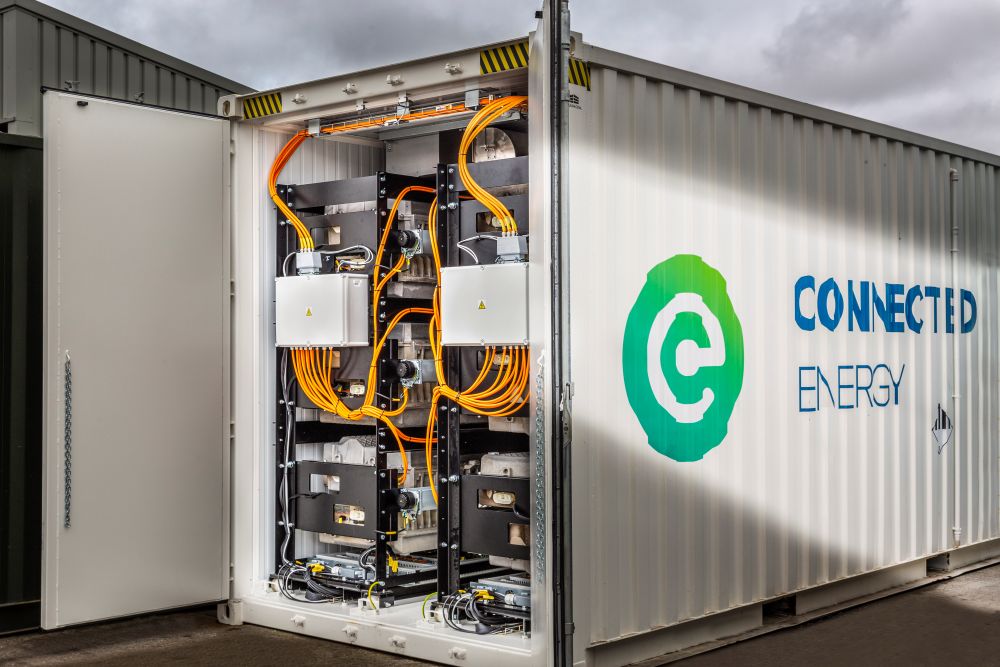
A central issue facing maritime electrification is the limited capacity of existing grid connections. Many ports cannot deliver the high-power electricity required for shore power or rapid vessel charging without significant and costly grid upgrades, slowing progress toward emissions reduction. PINS addressed this challenge by demonstrating how battery energy storage systems (BESS), combined with smart energy-management systems, can provide flexible and scalable solutions within existing grid limits.
Each pilot site represented a distinct use case. Cowes focused on small electric workboats and water taxis with frequent charging cycles. Portsmouth considered high-power shore-power requirements for ferry and cruise operations, where BESS could improve the use of existing grid infrastructure. The work also found that, because of spatial constraints and the need to serve different areas of the port, a floating BESS or battery-barge concept may be more attractive than simply expanding fixed shore-side battery capacity. Falmouth examined passenger ferry electrification in historic and constrained waterfront locations with weak grid connections. The work highlighted the limitations of centralised charging in these settings and pointed instead toward distributed, lower-power recharging infrastructure that can work within existing site constraints. Across these environments, the project evaluated how integrated energy systems—optionally including on-site solar generation—can reliably meet diverse charging requirements.
The project assessed current and future energy demand through detailed duty-cycle modelling and evaluated four battery technologies: lithium-iron-phosphate (LFP), second-life lithium-ion, sodium-ion (NIB) and soluble lead-flow batteries (SLFB). These were compared in terms of cost, safety, performance and suitability for port environments. The findings show that both established and emerging technologies can support maritime electrification, with newer options offering strong potential for UK-based supply chains.
System-level modelling demonstrated that battery-supported solutions can reduce peak grid demand, enable higher-power charging from constrained connections, and improve utilisation of renewable energy such as on-site solar. The project also reviewed a range of charging infrastructure options, from CCS-based DC systems for smaller vessels to high-power shore connections for ferries and cruise ships, alongside emerging approaches such as wireless charging and DC microgrids.
Overall, PINS has shown that battery-supported shore-power and vessel-charging systems can play a key role in enabling maritime electrification despite grid limitations. By integrating energy storage with intelligent control systems, ports and harbours can reduce dependence on grid reinforcement, lower the cost of delivered energy, improve use of on-site renewables and increase operational flexibility. The next phase is to move toward real-world demonstration at a pilot site, validating technical performance, operational processes and commercial models to support wider deployment across the UK maritime sector.
In summary, PINS demonstrates that battery-supported shore power systems can play a key role in enabling maritime electrification despite grid limitations. The project highlights that viable, scalable solutions are already available, with further improvements expected as battery technologies continue to evolve.
PINS was funded by UK Government through the UK Shipping Office for Reducing Emissions (UK SHORE) in the Department of Transport. The project was lead by MSE International with 9 partners from across industry and academia, combining expertise in maritime operations, energy storage technologies, and systems engineering.
A Case Study film about PINS commissioned by Innovate UK and an 'Insight Paper' by project partner CENEX will be published shortly.
To be kept up to date with activities, projects and events in the area of maritime decarbonisation, sign up to the MSE Maritime Decarbonisation Interest Group.